
The Great Mic Debate
In the world of podcast production, there is one piece of gear that has reached legendary, almost mythical status: the Shure SM7B. You’ve seen it in every high-end studio, on Joe Rogan’s desk and in nearly every ‘aesthetic’ TikTok creators studio setting.
But, I’m going to tell you something a little bit controversial. Just because it ranks as one of the most famous microphones, it doesn't mean it’s the best one for your podcast.
The Great Mic Debate isn't actually about which mic is better, it’s about which mic fits your environment, your voice, and your budget. Let’s break down a few contenders.
The Heavyweight Champion: Shure SM7B
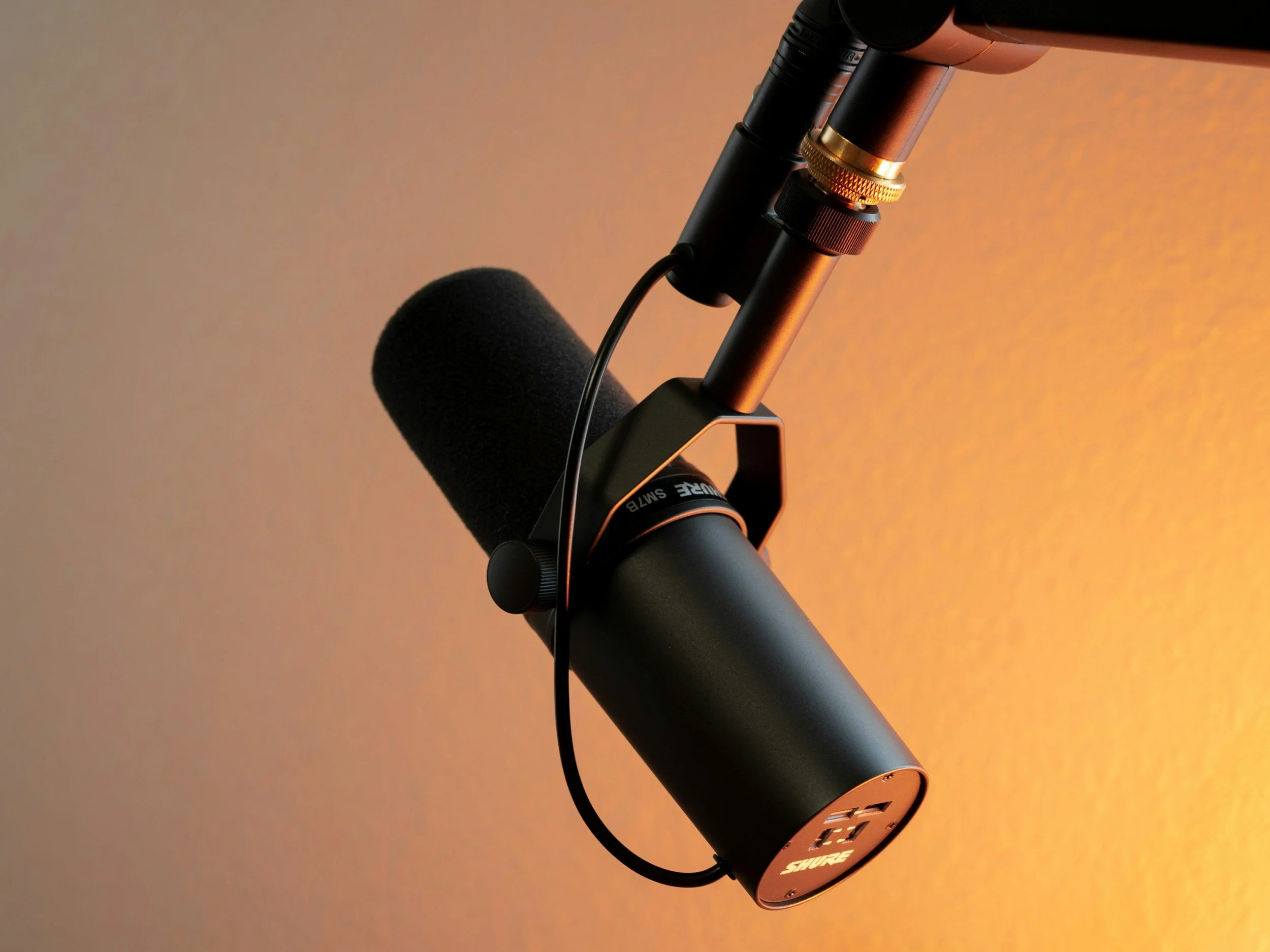
Shure SM7B Microphone
There is a reason this mic is the industry standard. It produces that ‘radio-ready’ thick, warm vocal tone that listeners love.
The Pros: Incredible off-axis rejection (it won't pick up the neighbour's lawnmower) and a built-in pop filter.
The Catch: It is gain-hungry. You cannot just plug this into a cheap interface. To make it sound good, you usually need a high-end preamp adding another £250 to your bill.
Best For: Professional studios, treated rooms, and loud or boomy voices.
The Practical Challenger: RØDE PodMic
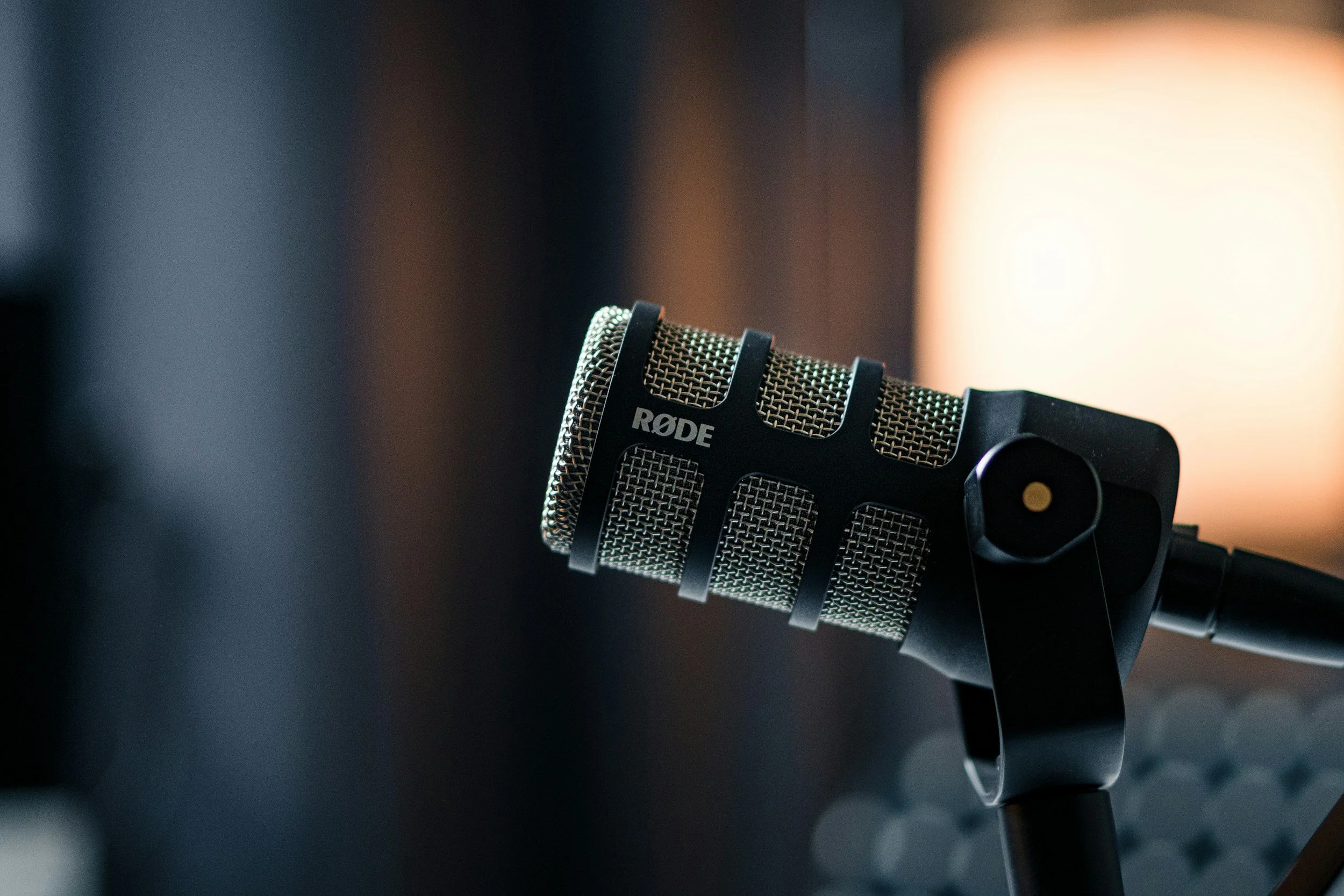
Rode PodMic
If the SM7B is a luxury SUV, the PodMic is a reliable Jeep. It’s built like a tank and designed specifically for speech.
The Pros: It’s roughly 1/4 of the price of the Shure. It has a crisp, broadcast sound that cuts through a mix without much editing.
The Catch: It can sound a bit thin or sharp compared to the warmth of higher-end mics.
Best For: Beginners, multi-guest setups (where buying four SM7Bs would break the bank), and those who want a ‘plug-and-play’ XLR experience.
Audio-Technica ‘v’ Blue Yeti
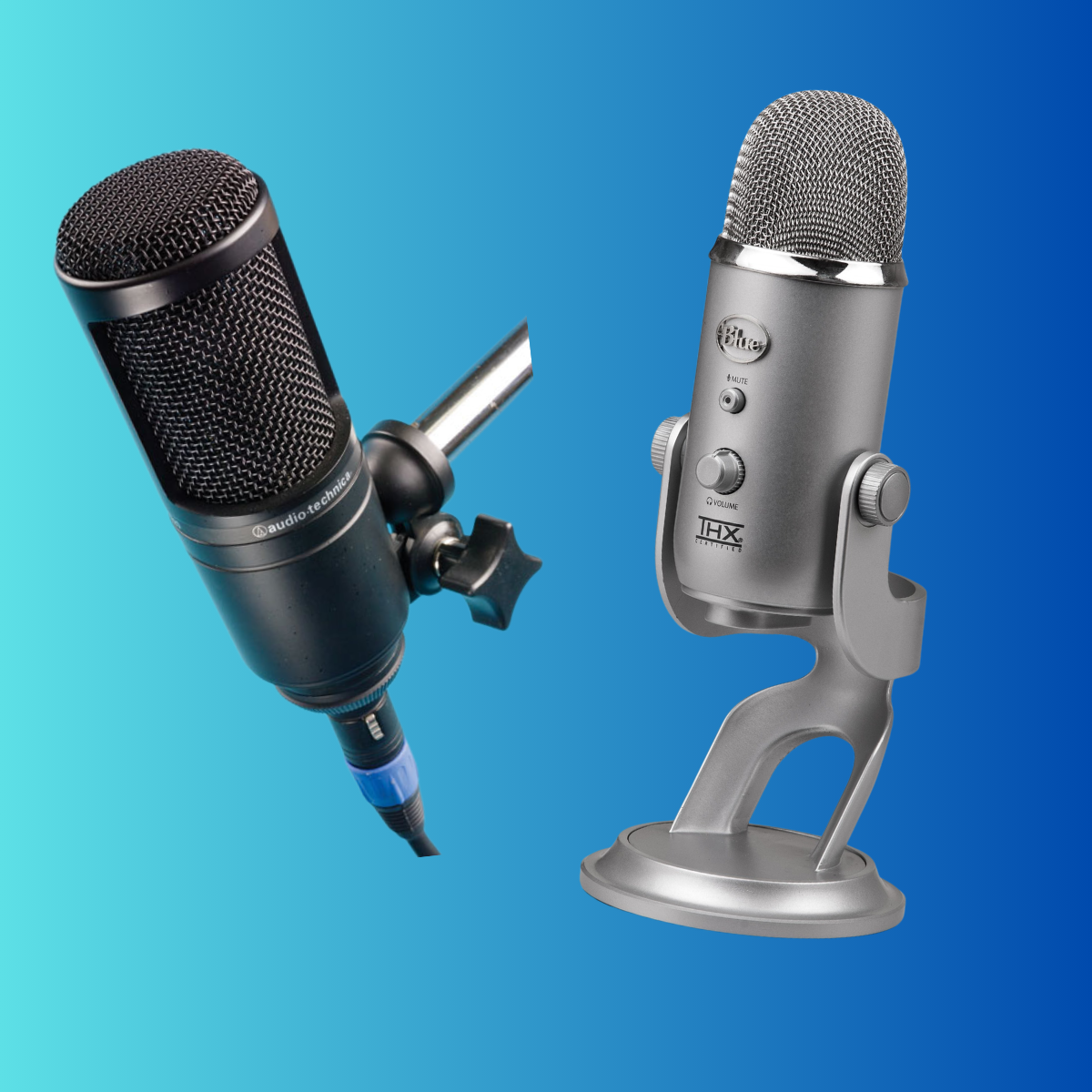
Audio-Technica AT2020 & Blue Yet
While Dynamic mics are the gold standard for podcasting, Condenser mics are common in home set-ups.
The Pros: They capture incredible detail and ‘air’ in the voice.
The Catch: They hear everything. If the washing machine is running, your cat is purring in the next room, or your room has an echo, a condenser mic will highlight those flaws.
Best For: People recording in professional, sound-treated booths or voice-over artists.
The Verdict: Which should you choose?
Before you part with good money on an SM7B (or equivalent) ask yourself - how does my room sound?
If you are recording in a spare bedroom with hardwood floors and zero sound treatment, go with a Dynamic Mic like the PodMic or the Shure MV7. They are much better at ignoring the echo of a room.
If you have a limited budget, spend less on the mic and more on acoustic panels or a heavy rug. A £150 mic in a quiet room sounds better than a £500 mic in a canyon.
Choosing the right gear is only 20% of the battle; the other 80% is how you process that audio in post-production.